
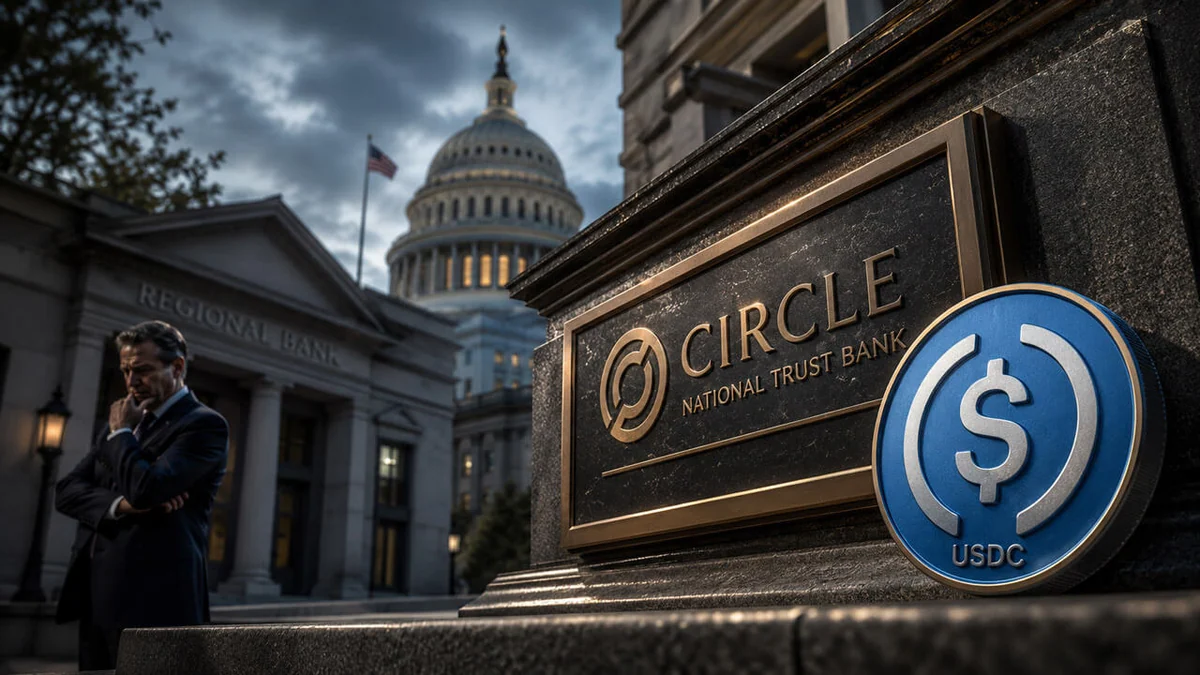
Circle became a federal trust bank – now lenders warn stablecoins is projected to drain $500 billion
Washington just gave one of the world's largest digital currencies a more official place in the US financial system. On July 10, Circle won final approval from the Office of the Comptroller of the Currency to open a...
Bitcoin 1 Minute
An important story is making waves across the blockchain ecosystem. Washington just gave one of the world's largest digital currencies a more official place in the US financial system. On July 10, Circle won final approval from the Office of the Comptroller of the Currency to open a national trust bank under federal supervision. Circle called it a major step for USDC, as the approval makes it easier for banks, payment firms, asset managers, and corporate treasury desks to treat USDC as something solid enough to build around.
However, banks see the same approval and draw a different conclusion. In January, Standard Chartered said stablecoins could pull about $500 billion from US bank deposits by the end of 2028. The Federal Reserve has sketched out an even wider range of possible outcomes.
Market Dynamics
A December 2025 FEDS Note said stablecoin adoption could cut lending by anywhere from $65 billion to $1. 26 trillion, depending on the extent of adoption and where issuers keep their reserves. So Circle now has a federal banking charter, but it isn’t the kind of charter that turns it into a lender with branches, checking accounts, and insured deposits: its new entity is a national trust bank.
Circle’s own announcement says Circle National Trust will open with fiduciary digital-asset custody for Circle and its affiliates, while reserve management stays on the list of future capabilities. The OCC’s conditional approval, issued on December 12, 2025, described the proposed institution as a “trust bank” conducting “trust-company” activities and made clear that the bank itself remains separate from the stablecoin-issuance function. Circle got a federal trust-bank structure around custody and fiduciary services.
It didn't take on the ordinary business of gathering retail deposits and recycling them into mortgages, business loans, and local credit. But that’s still a meaningful victory for the company because federal supervision gives institutional counterparties a clearer regulatory frame for using USDC. For banks, especially smaller ones, it sharpens a long-running fear.
Market Impact
Stablecoins can gain official legitimacy and broader institutional adoption while competing with deposit-taking institutions that still carry the old obligations and the old funding model. The charter is essentially an upgrade to Circle's credibility. Stablecoins have spent years in an awkward category somewhere between crypto trading infrastructure and serious financial infrastructure, and OCC supervision pushes USDC further into the second category.
That lines up with the broader direction in Washington, as reported in ’s coverage of the GENIUS Act. The policy fight has moved past whether stablecoins should exist, and the main argument now is about how they should be supervised, where they fit in the financial system, and how close they should be allowed to get to deposit-like products. Related Reading The GENIUS Act opened the door for stablecoins, but regulators want to narrow it Stablecoins won the law, but now they have to survive the rulebook.
May 2, 2026 Andjela Radmilac Circle’s transparency page, updated July 13, showed $72. 95 billion in USDC in circulation and reserve components totaling about $73. 55 billion was held in bank deposits.
Crypto markets are watching this development closely as investors weigh its potential impact on prices.