Dutch crypto exchange collapses exposing customer balances’ true value amid multi-million-euro hole
Dutch crypto exchange Knaken's operating company and its affiliated payments foundation entered court-controlled bankruptcy on July 16 after the Rotterdam District Court found that the exchange could not repay customers...
Bitcoin 1 Minute
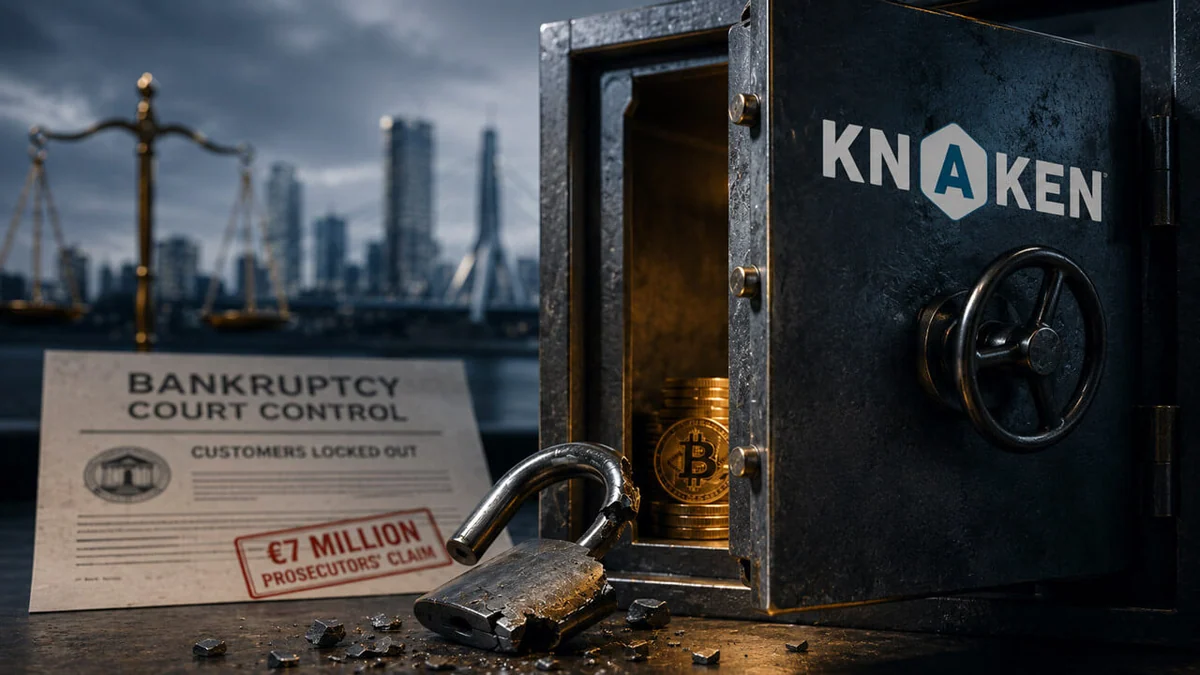
A notable development has hit the crypto markets. Dutch crypto exchange Knaken's operating company and its affiliated payments foundation entered court-controlled bankruptcy on July 16 after the Rotterdam District Court found that the exchange could not repay customers in full. The court said customers were locked out, payments had stopped, and a substantial coverage deficit had not been disclosed. The Dutch Public Prosecution Service told the court that about €7 million was missing from customer balances.
The order confirms that management will not control the wind-down. Hamm now has authority over both Knaken Cryptohandel B. and Stichting Knaken Payments.
Market Dynamics
Related Reading Millions of EU crypto users face exchange cutoff as MiCA deadline hits in days Around three in four of the crypto companies registered across Europe are expected to lose their license this summer in the most aggressive thinning the industry has probably ever seen. Jun 14, 2026 Andjela Radmilac Court control replaces Knaken’s payout plan Knaken argued that bankruptcy was unnecessary. It said criminal asset seizures, the service shutdown, and its custody structure already protected customers, and proposed an independent verification process followed by its own distribution protocol.
The court rejected that route and put an outside trustee in charge. The public-interest petition took an unusual route. Prosecutors stepped in after blocked accounts and poor disclosure left customers unable to determine where they stood or to file a meaningful bankruptcy petition.
Court control gave them a process outside the exchange’s own books and proposed payout system. The Dutch bankruptcy trustee works for the collective body of creditors under a supervising judge. The trustee inventories assets and claims, examines records and possible irregularities, protects and liquidates the estate, and proposes distributions according to claim priority, as set out in Dutch judiciary guidance and the Bankruptcy Act.
Market Impact
For Knaken, that mandate supports reconciling platform ledgers with wallets, access controls, bank accounts, and other property across the company and the foundation. It also establishes which entity owes each customer and whether property described as a customer asset was actually held outside the exchange's own estate. The appointment provides independent verification, but it neither fills the deficit nor determines a recovery percentage on its own.
The Fiscal Intelligence and Investigation Service, known as the FIOD, was examining possible criminal conduct and carried out searches on June 29, according to prosecutors. Investigators seized digital data carriers and company assets, and no arrests had been made as of the June 30 statement. Separate teams handled the civil petition and criminal investigation, and neither the investigation nor the seizures amount to a finding of guilt.
The legal treatment of seized property and its coordination with the bankruptcy estates remain to be clarified through the two processes. Custody protection depends on assets being there The bankruptcy of Stichting Knaken Payments makes the custody structure central to customer recovery. A separate foundation creates legal distance between an operating company and client property, but does not prove that sufficient assets were held, correctly recorded, or available for return when the platform failed.
Crypto markets are watching this development closely as investors weigh its potential impact on prices.