
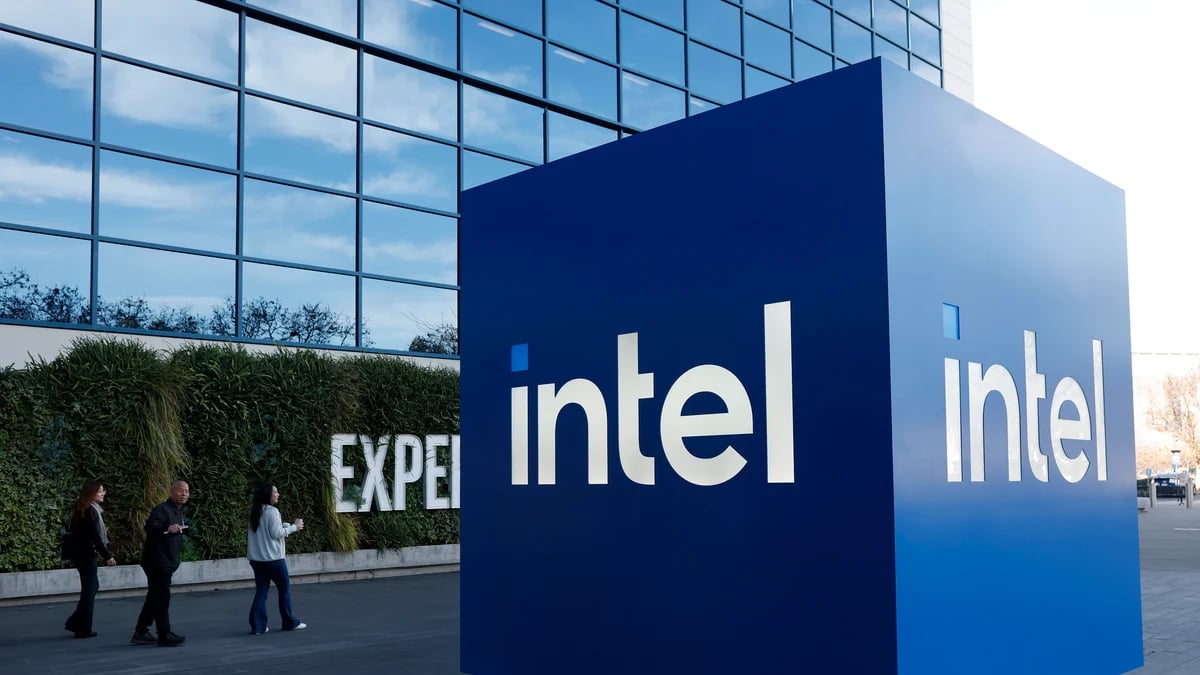
Intel stock is down 27% from June record highs. How the chipmaker can reverse the slide
Investors will be watching for two key updates when Intel reports earnings after Thursday's closing bell: stronger AI server CPU growth and further progress in its foundry business. The report comes at a critical time...
S&P 500 (SPY) Temmuz'da (DÜŞÜK) 730 Doları vuracak mı?
Breaking news from the markets: Investors will be watching for two key updates when Intel reports earnings after Thursday's closing bell: stronger AI server CPU growth and further progress in its foundry business. The report comes at a critical time for optimistic investors like us at the Club. After a blistering rally throughout the spring and into late June, the stock has pulled back, falling more than 27% from its record high close of nearly $141 per share on June 22.
That decline has less to do with any breakdown in the fundamentals for Intel the company and more with a larger sell-off in the semiconductor sector as investors reassess whether the hyperscalers — Intel's customers — can continue to spend aggressively on their artificial intelligence buildouts. As one of the best-performing stocks in the group, posting a 280% gain this year to its June peak, Intel was vulnerable to some profit-taking. So, what can Intel do to reverse the trend?
Economic Details
First, investors want proof that demand for its central processing units (CPUs) remains high and that Intel can meet it. Often described as the brains of a computer, CPUs manage the instructions and tasks that keep systems running. Because of this, they've become a valuable commodity in artificial intelligence too, as AI computing shifts from model training to inference, or the stage where AI models respond to user requests and perform tasks.
In particular, the rise of more advanced AI systems capable of autonomously completing multi-step tasks is driving much of the CPU demand right now. This shift has thrust Intel's chips into a spotlight once reserved for so-called AI accelerators, especially Nvidia 's graphics processing units (GPUs) and Google's in-house tensor processing units (TPUs). That opportunity, however, has led to some supply constraints.
First-quarter revenue came in at $13. 4 billion above the midpoint of the company's guidance. But Intel CFO David Zinser said at the time on the post-earnings call back in April that revenue would have been "meaningfully higher" if not for demand outpacing available supply.
Analyst Views
On Thursday evening, we want to see if Intel was able to ramp up supply. Enter Intel's still-nascent foundry business to help meet demand for its own processors, along with a new revenue stream for manufacturing chips designed by other companies. This dual role distinguishes Intel from its rival data center CPU designers, especially Advanced Micro Devices and Nvidia, and the tech giants with custom silicon, such as Amazon and Alphabet 's Google.
All of these companies rely on a third-party manufacturer, Taiwan Semiconductor (TSMC), to bring their chip designs to life. Intel is unique among advanced chip designers because it still operates its own factories, which are known as foundries in the chip industry. "Intel has, as of right now, the most clean room space expansion opportunity sitting before it," Ben Bajarin, CEO and principal analyst at Creative Strategies, a tech research firm.
Economists are analysing what the news means for the markets.