MiCA’s July 1 deadline is Europe’s first crypto user-migration test – OKX interview
Europe's crypto market resets on July 1, when MiCA's transitional period ends and unauthorized exchanges lose the legal right to operate in the EU. Whether the deadline holds depends on the app stores on European...
Bitcoin 1 Minute
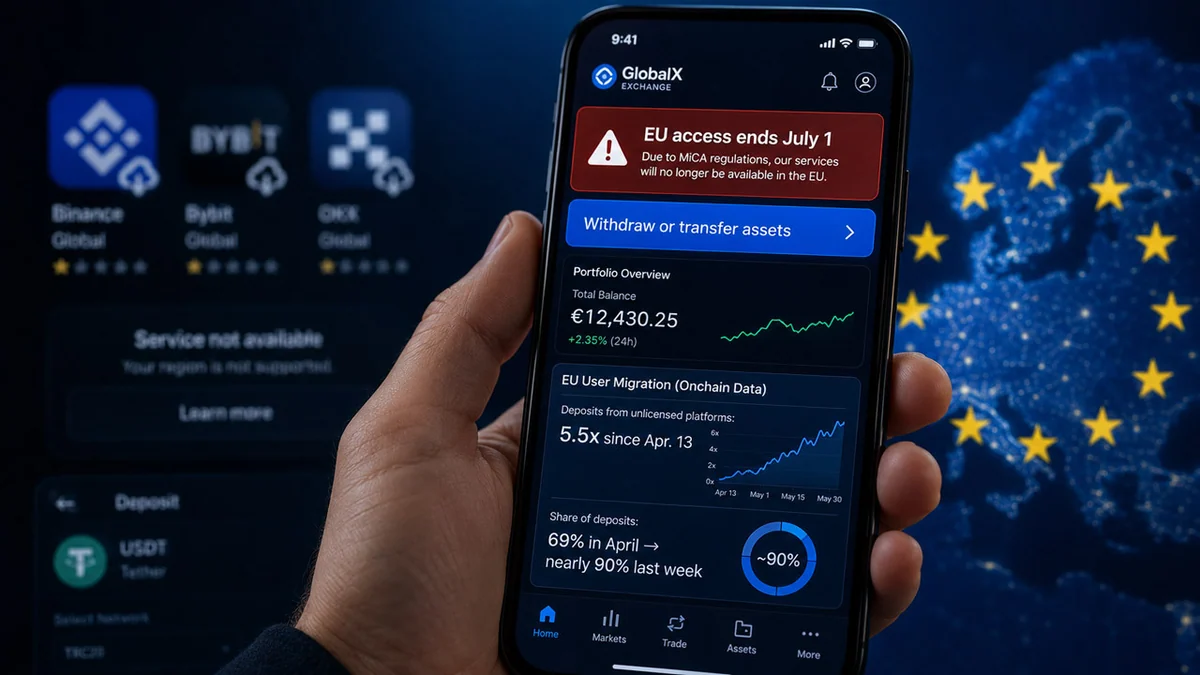
An important story is making waves across the blockchain ecosystem. Europe's crypto market resets on July 1, when MiCA's transitional period ends and unauthorized exchanges lose the legal right to operate in the EU. Whether the deadline holds depends on the app stores on European phones. Under the ESMA's June 23 statement, unauthorized crypto exchanges must immediately stop onboarding new EU clients, opening accounts, and marketing or soliciting business once the transitional period ends.
Activity has to narrow to selling or transferring assets, closing positions, and holding custody only as long as strictly necessary. Clients who stay with a platform outside that perimeter lose MiCA's protections entirely, including the safeguards covering client assets. Erald Ghoos, CEO of OKX Europe, told that the practical outcome depends on whether offshore platforms can still look available to European users through working apps, localized support, and reverse-solicitation claims.
Market Dynamics
Ghoos said: “The most immediate risk is delayed or blocked access to assets. The operational priority shifts from serving clients to managing the firm's own survival. That's when withdrawal queues lengthen, support goes silent, and users can't act quickly enough.
” Ghoos pointed to Zondacrypto's collapse in Poland as a recent example of that sequence playing out. Open positions, staking lockups, fiat off-ramps, and tax records all sit inside that exit window. A diagram titled “MiCA's access gap” shows legal access ending at the ESMA deadline while practical access can persist through offshore app routing.
ESMA's own statement acknowledges the risk, telling unauthorized firms to communicate clearly and repeatedly with clients and to maintain anti-money-laundering controls through the close-out. Ghoos says crypto deposits to OKX from non-MiCA-licensed platforms have grown 5. 5 times since the week of Apr.
Market Impact
Nearly 90% of deposits last week came from unlicensed platforms, up from 69% in April. Those figures describe inflows to a single licensed venue, but they show users moving weeks before the legal deadline took effect. A user checks whether the app is still in the store, whether login still works, and whether the deposit clears.
Ghoos frames the next phase of enforcement around that disconnect: “Some unlicensed exchanges are signaling that they aren't going away. Enforcement will be what determines which direction the displaced volume flows. ” MiCA's reverse-solicitation exception protects a transaction only when an EU client approaches a third-country firm on their own exclusive initiative.
Ghoos describes the carve-out's limits: “What qualifies as reverse solicitation is actually very narrow, applying only when an EU client has, on their own initiative, sought out a third-country firm with no support in the local language or any localization allowed. ” ESMA's guidance treats EU-language apps, push notifications, affiliates, and sponsorships as evidence that a transaction wasn't genuinely client-initiated, regardless of any disclaimer. If unlicensed apps stay downloadable in European stores, Ghoos says, “certain offshore exchanges will continue to look for ways to circumvent regulatory obligations in Europe.
This shift continues to shape the digital-asset landscape, with analysts examining its near-term effects.