
AI agents employ $24M market to act smarter as agentic crypto payments spread online
Lincoln Murr asked his AI agent to send some Twitter articles to his Kindle, copying a trick he'd seen suggested online. The agent scraped the articles with Firecrawl once Twitter started blocking it, then uploaded the...
Bitcoin 1 Minute
A notable development has hit the crypto markets. Lincoln Murr asked his AI agent to send some Twitter articles to his Kindle, copying a trick he'd seen suggested online. The agent scraped the articles with Firecrawl once Twitter started blocking it, then uploaded the result to a service called Stable Upload so it could reach his email. Murr, who leads AI product work at Coinbase, told he'd genuinely forgotten the agent even had a crypto wallet.
Both Firecrawl and Stable Upload sit among the expanding list of services built around x402, an open payment standard that lets software pay for access to the moment it needs it. His agent picked both providers, paid them in small increments, and finished the task without a single approval from him along the way. When the agent picks the vendor Most AI tools today work because a developer opened the account, generated the API key, and funded the credits.
Market Dynamics
Murr described a pattern taking hold in which an agent given a high-level task can shop for whatever capability it needs during the work itself. He offered a cleaner example where a user asks an agent to turn a PDF into a podcast, and it can weigh Google's NotebookLM against ElevenLabs on cost, quality, and response time, then pick whichever fits the task, sometimes catching a first-time-user discount along the way. Murr noted that the wallet does double duty, serving as both the agent's identifier and its payment method, a combination that replaces the whole ritual of signing up for API keys and pre-funding an account before an agent can touch a new service.
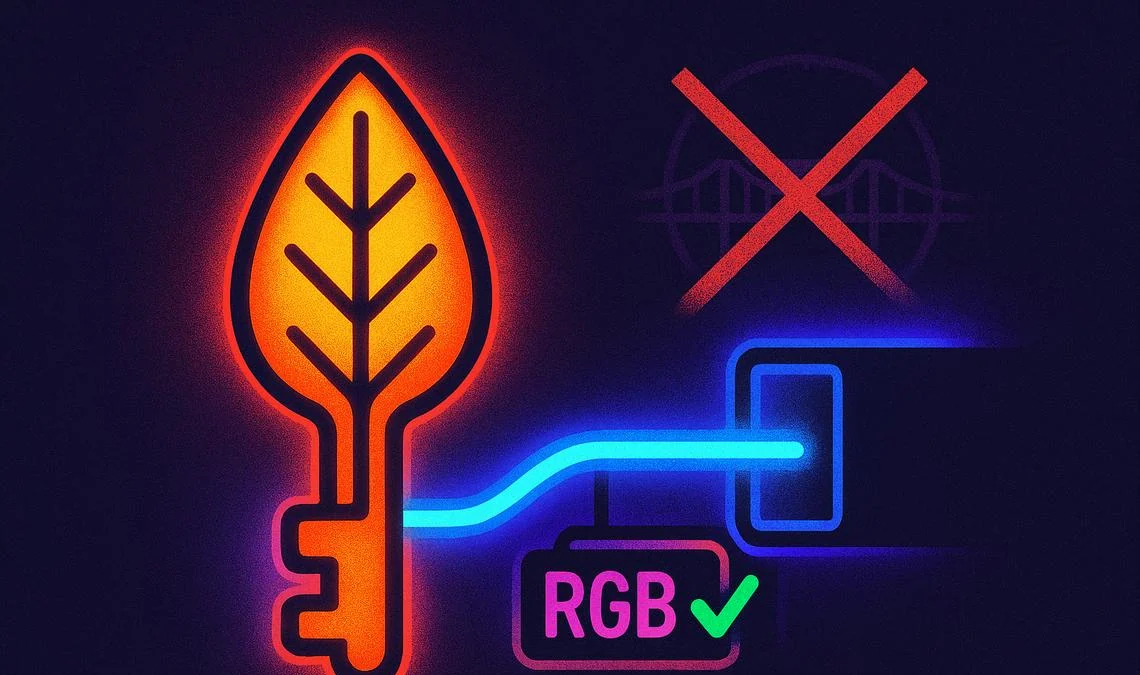
A flowchart contrasts developer-selected tool access, which requires pre-funded API keys, with agentic payments, in which agents discover, compare, and pay for tools at runtime. The Linux Foundation launched an x402 Foundation in April, with Coinbase contributing the original protocol alongside early backers including AWS, Stripe, Visa, Mastercard, American Express, Shopify, Google, Microsoft, and Cloudflare. Coinbase's Bazaar now indexes over 10,000 paid tools that an agent can search and call directly, functioning close to Murr's description: a directory built with agents as the primary users.
AWS added a feature this June that lets CloudFront customers return a machine-readable price and payment terms to any bot requesting protected content, and then verify payment at the network edge before granting access. Cloudflare launched its version in July, describing the new setup plainly: the agent becomes the buyer, and the request becomes the transaction. From attention to utility Murr framed the underlying move as a transition from an economy built on attention toward one built on utility.
Market Impact
He said that the internet runs a “Napster, Limewire” version of agent access, where an agent can scrape a site freely because there's no real equivalent of an ad for software to notice. Cloudflare and AWS together sit in front of roughly half of global internet traffic, giving them the position to alter that by charging agents a few cents for the privilege of reading a page at all. Murr argued that the same transition could hollow out the subscription model from underneath, as a flat monthly fee primarily benefits the business that collects it.
A world where a million agents each pay a cent per call opens up something closer to walk-in retail: frictionless, one-off, and open to anyone. He expects microtransactions to work as a top-of-funnel, with agents graduating into steadier vendor relationships, discounts, and bulk pricing once a pattern of paid use builds trust on both sides. Who controls the directory?
An economy where agents choose which services are paid raises the question of who ultimately decides what gets discovered and ranked. Murr pointed to x402's governance as the answer, a foundation built from companies like Stripe and Coinbase that would ordinarily be competitors. Cloudflare will still control what happens on sites that sit behind its infrastructure, and the broader goal is folding payment into the internet's plumbing itself, the way HTTP became a shared standard nobody owns.
This shift continues to shape the digital-asset landscape, with analysts examining its near-term effects.