Crypto exchanges are selling stock options and tokenized stocks but users may not own what they think
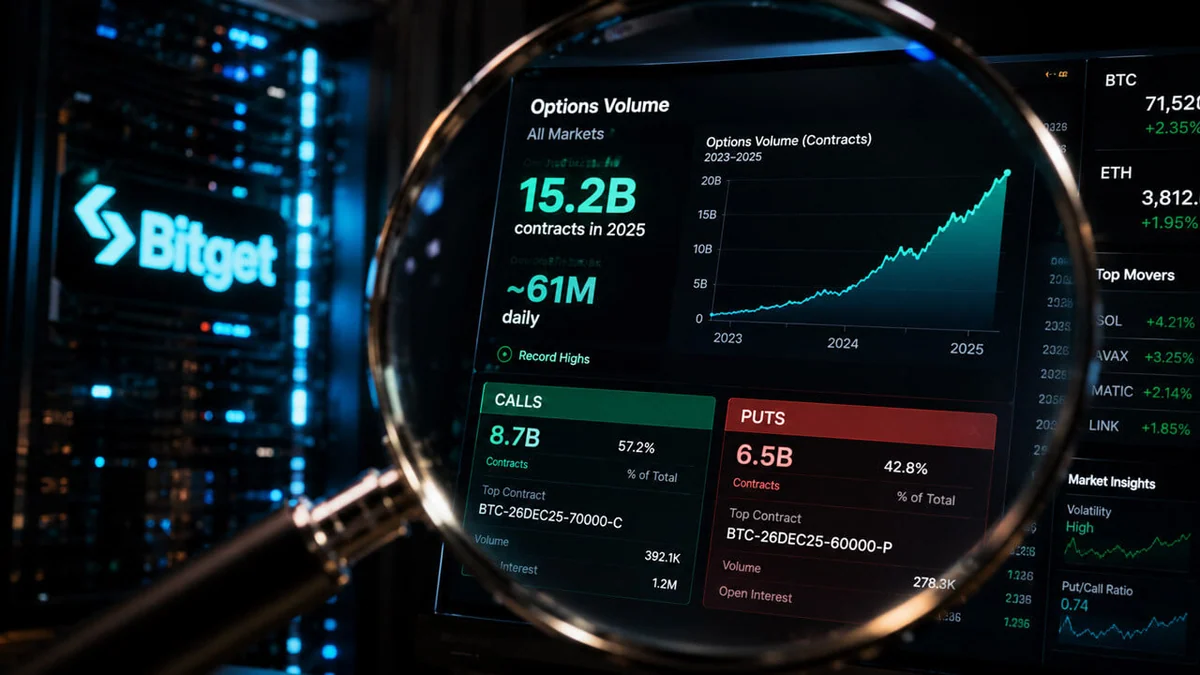
Bitget launched US stock options this week and says no other major crypto exchange offers them. The product starts with the simplest version of options trading, where eligible users buy single call or put contracts,...
Bitcoin 1 Minute
An important story is making waves across the blockchain ecosystem. Bitget launched US stock options this week and says no other major crypto exchange offers them. The product starts with the simplest version of options trading, where eligible users buy single call or put contracts, with more complex strategies planned as it matures. It sits alongside Bitget's existing crypto markets, tokenized stocks, and contract-for-difference products in gold, forex, and indices.
The launch follows a record stretch in the options market itself. US listed options volume reached 15. 2 billion contracts in 2025, up 26% from the prior year and the sixth straight annual record, with roughly 61 million contracts changing hands daily, according to Cboe.
Market Dynamics
An exchange that built its business on crypto trading now wants a piece of one of the busiest markets in traditional finance. A stock option is a contract that gives its buyer the right to buy or sell a stock at a set price before a deadline, and it trades under strict US financial rules. A tokenized stock is a version of a stock, or of the money you'd make or lose on one, recorded on a blockchain instead of in a traditional brokerage.
What that token legally entitles you to depends entirely on how the company that created it configured it. Bitget now sells both within one app, which makes it a pretty good test case for distinguishing between them. What a stock option actually gives a trader The SEC defines options as contracts that give the purchaser the right, but not the obligation, to buy or sell a security at a fixed price within a set period.
The way this works is much simpler than the vocabulary used to describe it. Say a stock trades at $100 and a trader expects it to jump after earnings. They can buy a call option with a strike price of $110 for a small upfront premium.
Market Impact
The strike is the price the contract is built around, and the premium is what the trader pays for it. If the stock climbs far enough before the option expires, the contract gains value. If it doesn't, the option expires worthless, and the trader loses the premium and nothing more.
A call is a bet that a stock will rise. A put is a bet that it will fall, or a way to protect shares the trader already owns against a drop. For buyers of simple calls and puts, the most they can lose is the premium they paid.
Sellers are in a different position because their losses can far exceed the premium they collected, which is why brokerages only allow experienced, approved customers to sell them. That gap in risk explains why Bitget opened with buying only. More advanced trades, where a user can sell options or combine several at once, stay off the menu for now, so a user's downside is limited to what they spend on the contract.
This shift continues to shape the digital-asset landscape, with analysts examining its near-term effects.