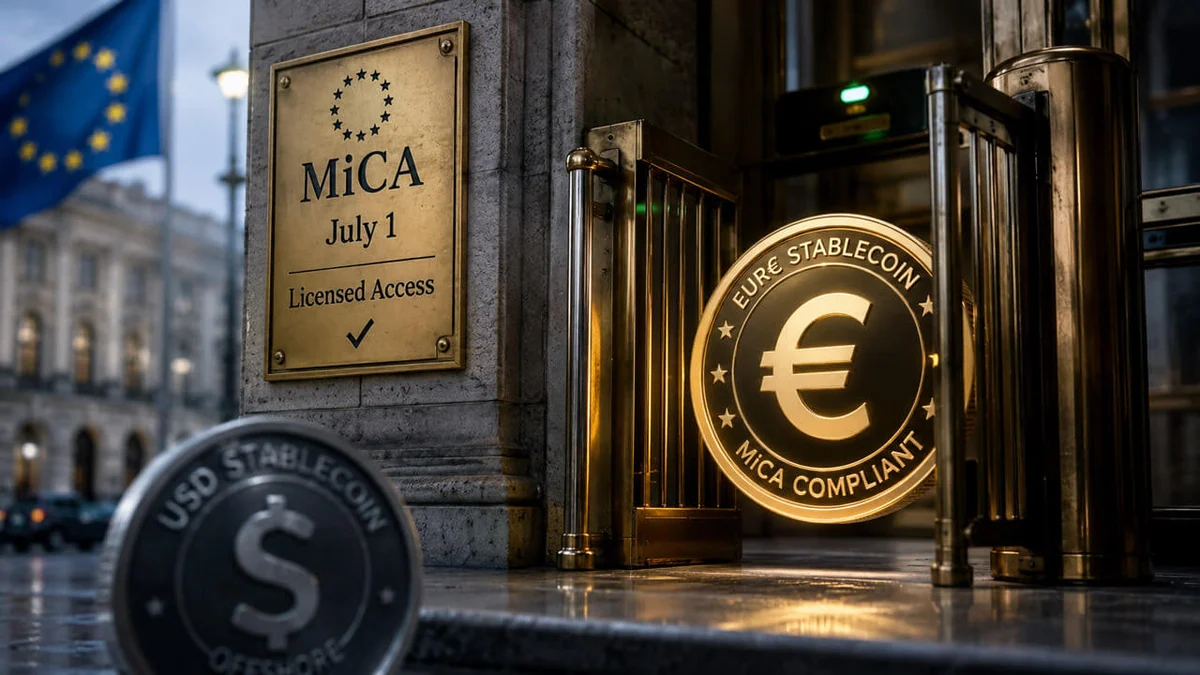
How MiCA brings banks closer to controlling Europe’s stablecoin access
Europe's MiCA deadline has now entered the phase in which licenses begin to shape distribution. The first wave of concern centered on which platforms European users could still reach after July 1. The next phase is more...
Bitcoin 1 Minute
An important story is making waves across the blockchain ecosystem. Europe's MiCA deadline has now entered the phase in which licenses begin to shape distribution. The first wave of concern centered on which platforms European users could still reach after July 1. The next phase is more structural.
MiCA is deciding which issuers, banks, asset servicers, and app providers can continue offering stablecoins and crypto products to customers within the regulated market. ESMA says MiCA creates uniform EU rules for crypto-asset issuers and service providers, covering transparency, disclosure, authorization and supervision. Its interim MiCA register was last updated on July 3, two days after the transitional period for many existing crypto-asset service providers expired.
Market Dynamics
That timing matters because the end of the grandfathering period changes MiCA from a licensing deadline into a distribution filter. Authorized firms can keep serving the market. Unauthorized firms must move toward exit, transfer, or closure.
ESMA's June 23 statement told unauthorized crypto-asset service providers to stop onboarding new EU clients, stop opening new client relationships or accounts, cease marketing and solicitation, and limit activity to steps needed to sell, transfer, reallocate or close positions. Custody can continue only for the strictly necessary period for an orderly exit. That is the regulatory frame.
The market effect is sharper: MiCA is turning authorization into a source of distribution power. Related Reading MiCA deadline likely to shift smaller crypto apps into licensed custody rails BitGo’s Bielik deal shows how MiCA deadline pressure can preserve user access while shifting control to licensed custody rails. Jun 22, 2026 Liam 'Akiba' Wright Banks are moving into the gap The clearest example comes from within traditional finance.
Market Impact
CACEIS said Crédit Agricole launched EURXT on July 1 as a euro-denominated electronic money token issued on Ethereum by CACEIS. The group described it as MiCA-compliant, pegged to the euro, backed one-to-one by fiat euros and initially available to institutional investors and corporate clients of CACEIS. The first use case was settlement for a subscription into a tokenized Amundi money market fund rather than a consumer wallet campaign.
That detail shows where compliant stablecoins may first gain traction in Europe: inside asset servicing, fund settlement and bank-controlled institutional workflows. CACEIS also said EURXT's reserves are made exclusively of cash held on the balance sheet of CACEIS Bank. The token's compliance pitch is therefore more than Ethereum issuance.
The reserve, issuer, and client channels all sit within a regulated financial group. That structure matters because stablecoin competition in Europe may increasingly depend on who can combine on-chain settlement with a regulated balance sheet, a trusted client base and a distribution channel that supervisors already understand. A euro token issued through an asset servicer enters the market with a different path from an offshore dollar stablecoin seeking placement on crypto-native venues.
This shift continues to shape the digital-asset landscape, with analysts examining its near-term effects.