The legal fight to get equal pay for Germany's disabled workers
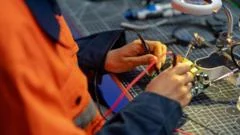
The legal fight to get equal pay for Germany's disabled workersImage source, Getty ImagesImage caption, Special workshops for disabled people employ 300,000 people in GermanyByAmy ZayedBusiness reporter, Reporting...
$4,200-$4,600 — Gold (GC) Where to settle in June?
Here is a story making headlines in the economy: The legal fight to get equal pay for Germany's disabled workersImage source, Getty ImagesImage caption, Special workshops for disabled people employ 300,000 people in GermanyByAmy ZayedBusiness reporter, Reporting fromPaderborn, GermanyPublished13 minutes agoA test case before a German court could have implications for hundreds of thousands of disabled people in the country who currently work for less than the legal minimum wage. The legal action has been brought on behalf of 57-year-old Jürgen Linnemann, who has spent all his working life in a "Werkstatt für behinderte Menschen" – a workshop for disabled people. In English these would be called sheltered workshops, and in Germany some 300,000 disabled people work in them.
The workshops produce a range of goods for companies and brands that are often known internationally, but the people who make them are paid less than the minimum wage, less than a worker in the mainstream economy would be paid for doing the same work. This is possible because disabled people in sheltered workshops are technically not employees. That means not only that the right to the minimum wage does not apply to them, but also that they do not enjoy other rights, such as the ability to join a trade union.
Economic Details
Linnemann is asking the court to rule that people like him should be treated as employees and be paid the minimum wage. According to Hubert Hüppe, a former federal commissioner for the interests of disabled people, and a prominent critic of the workshop system, once you become part of what is a segregated system it's very hard to get out of it. "You go from a special kindergarten to a special school and then into one of these sheltered workshops," he says.
This is what happened to Dirk Hähnel, now in his 50s, who spent most of his adult life in sheltered workshops near the central-western city of Paderborn. He was sent initially to a regular school, but before long was transferred against his wishes to a special school. "My parents were told that a special school was the best choice," he tells me.
Later, when he was preparing to leave that institution, he was told his only option was to go to a workshop. "I didn't want to do that," he says. So he tried to find an apprenticeship instead.
Analyst Views
He remembers one devastating job interview. "I told my potential employer that I had epilepsy and he said, 'we don't employ idiots here'. "Image caption, Dirk Hähnel has spent much of his adult life in a workshopI have heard many similar stories.
I myself was born blind, and remember very well my first school report, when I was six, which advised my parents to send me to a school for children with learning disabilities. I grew up speaking both German and Arabic and constantly mixed them up, not understanding that they were separate languages. If my parents had not ignored that first school report, I too might have ended up in a workshop.
Instead, today I'm one of only a handful of journalists in Germany with a visible disability.
Financial markets are tracking the development closely as investors assess the likely impact.