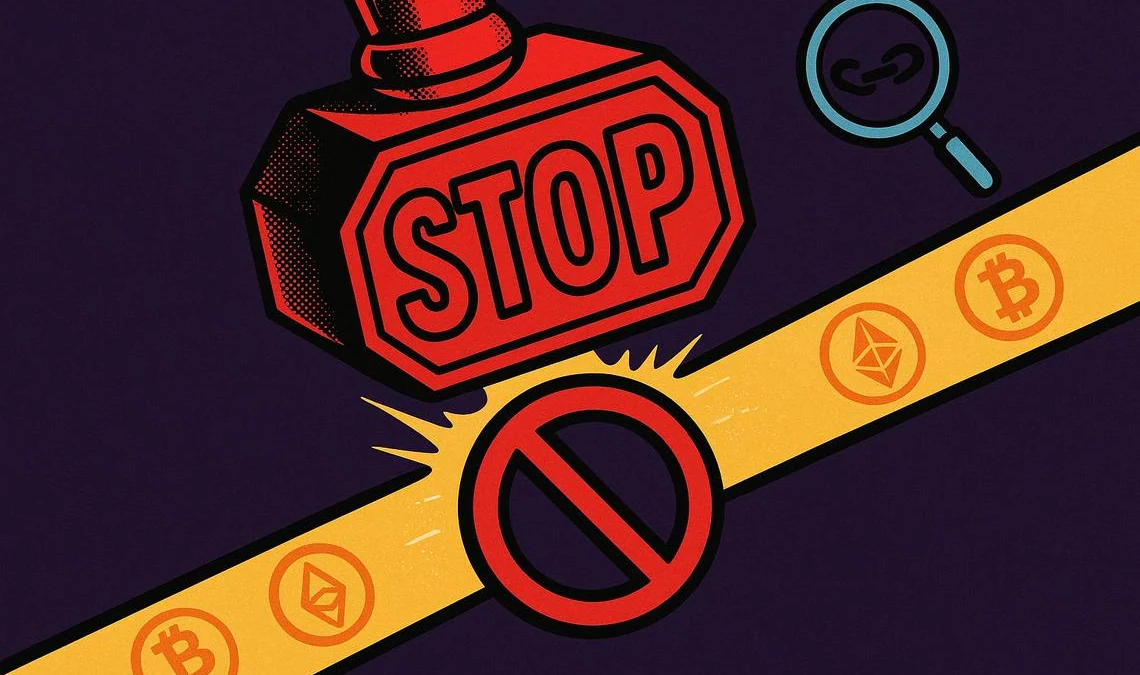

Why Bitcoin ATMs are becoming the last stop in America’s $11B crypto scam pipeline
Crypto scams start online with a fake bank alert, a cloned voice, a romance message, or a tech-support pop-up. Then, the last instruction is usually much more physical: withdraw cash, find a crypto kiosk, scan a QR...
Bitcoin 1 Minute
An important story is making waves across the blockchain ecosystem. Crypto scams start online with a fake bank alert, a cloned voice, a romance message, or a tech-support pop-up. Then, the last instruction is usually much more physical: withdraw cash, find a crypto kiosk, scan a QR code, and keep the scammer on the phone until the money is gone. However, that last step is turning Bitcoin ATMs and other crypto kiosks into a pressure point in America's fraud problem.
The FBI's Internet Crime Report said that Americans submitted 181,565 complaints involving cryptocurrency, with reported losses exceeding $11 billion. A later IC3 cryptocurrency-kiosk PSA put a smaller but more concrete mechanism under the spotlight: 13,460 complaints involving crypto kiosks in 2025 and $388,981,267 in adjusted losses. Online fraud creates the belief that money must move immediately.
Market Dynamics
The kiosk creates the payment rail a frightened victim can operate in a convenience store, gas station, or supermarket while a criminal gives instructions in real time. Once cash becomes crypto and moves into a wallet controlled by the scammer, the window to interrupt the transfer usually closes. The kiosk becomes the point where families, banks, operators, and state regulators still have a chance to step in.
The $11B problem has a street-level endpoint The FBI's 2025 numbers show the scale of the broader fraud pipeline. IC3 received 1,008,597 total complaints in 2025, and the FBI said cyber-enabled crimes defrauded Americans of nearly $21 billion. Cryptocurrency complaints were the highest-loss descriptor in the report, while AI-related complaints added nearly $893 million in losses.
The rise of generative AI has helped scammers get victims to reach the kiosk already primed to act. The FBI said scammers now use fake social profiles, voice clones, identification documents, and believable videos depicting public figures or loved ones. Those tools do not need to touch a blockchain to push someone toward the machine.
Market Impact
They create the pressure, authority, or panic that sends a victim out the door with cash. The kiosk PSA shows what happens next. IC3 said cryptocurrency kiosks are ATM-like devices or terminals that allow users to exchange cash for cryptocurrency.
It said criminals may direct victims to send funds through them, and that complaints involving the devices rose 23% in 2025 while losses rose 58% from 2024. Cryptocurrency-related IC3 complaints 181,565 complaints and more than $11 billion in reported losses Shows the national scale of crypto-linked fraud Cryptocurrency-kiosk complaints 13,460 complaints and $388,981,267 in adjusted losses Shows the physical last-mile channel Kiosk trend from 2024 Complaints up 23%; losses up 58% Shows the problem is accelerating People over 50 in kiosk complaints More than half of complaints; over $302 million in losses Shows where consumer harm is concentrated IC3 also warned that its kiosk data covers scams involving cryptocurrency kiosks and may include other transaction types. Still, kiosks are becoming a recurring part of the payment path in scams that have already moved from online persuasion to real-world cash movement.
Related Reading Bitcoin ATMs were crypto’s street-corner bank. Now regulators are shutting the door Crypto’s first real-world retail infrastructure is breaking down under the weight of scam complaints, legal pressure and the growing normalization of regulated Bitcoin investing. May 30, 2026 Andjela Radmilac The scammer does not need to touch the machine The mechanics are simple enough to make the device dangerous.
This shift continues to shape the digital-asset landscape, with analysts examining its near-term effects.