
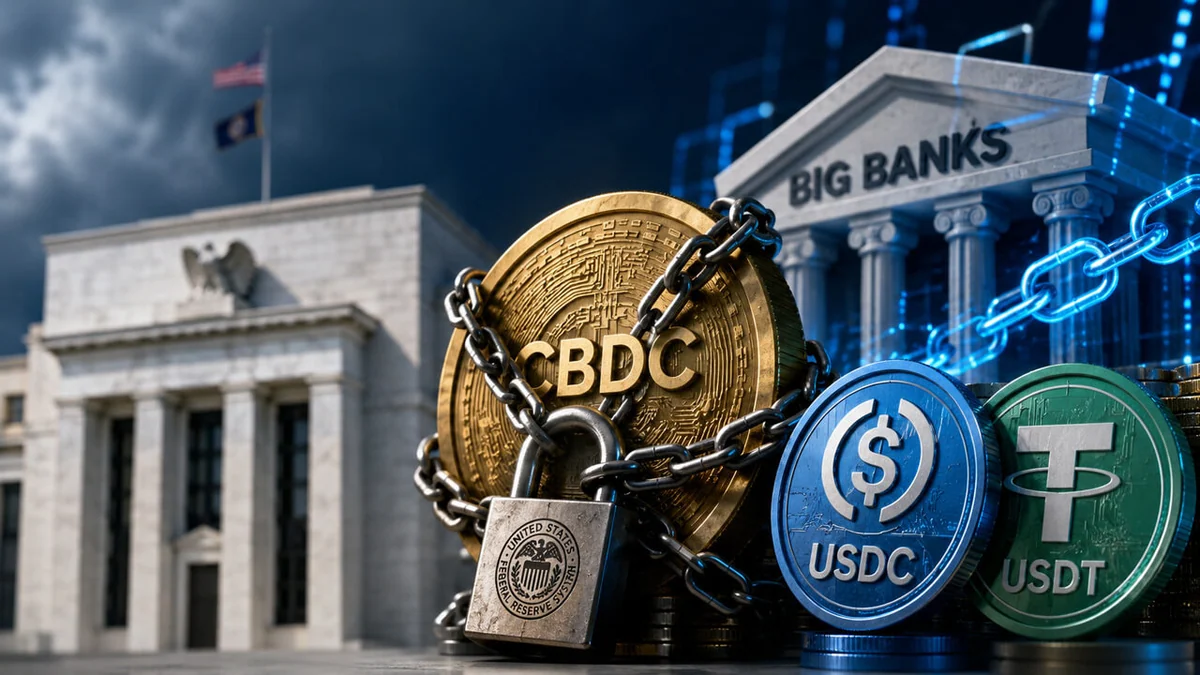
Congress blocks introduction of any CBDC in the next 4 years – but the fight over digital money is just starting
Congress just blocked the Federal Reserve from issuing a CBDC, and the companies benefiting most are private stablecoin issuers like Circle and Tether. The 21st Century ROAD to Housing Act passed the Senate 85-5 on June...
Bitcoin 1 Minute
An important story is making waves across the blockchain ecosystem. Congress just blocked the Federal Reserve from issuing a CBDC, and the companies benefiting most are private stablecoin issuers like Circle and Tether. The 21st Century ROAD to Housing Act passed the Senate 85-5 on June 22 and cleared the House 358-32 the next day, and folded inside that housing package is a four-year ban on a Fed-issued central bank digital currency. On the surface, it's a clean win for crypto, because a government digital dollar would have competed head-on with private dollar tokens, and now it can't arrive until 2031 at the earliest.
But the catch is that the Fed was never close to launching one. So Congress has blocked a competitor that wasn't coming, while the contest that counts is taking shape inside the banking system. America's largest banks are building a digital-money network of their own, and it could do much of what stablecoins promise while keeping cash on bank balance sheets.
Market Dynamics
What ended this week was the government's path to a digital dollar, and the private race to build one carried right on, running straight through the commercial banks. The CBDC ban blocks a rival that was never on its way Most of the money people already use is digital. When you open a banking app and see a balance, that figure isn't cash sitting in a vault with your name on it.
It's a bank deposit, a claim on the bank, money the bank owes you, and lets you spend with a card or send by transfer. Physical cash is the one form of public money that comes straight from the government through the Fed. Everything else you hold day-to-day is a promise from a private company.
A central bank digital currency would add a third kind of money to that mix. The Fed defines a CBDC as a digital dollar that's a direct liability of the central bank and available to the general public. It would be government-issued digital cash, a balance backed by the Fed itself and spendable from a phone.
Market Impact
Most of the world is already pursuing some version of this: China runs a digital yuan at scale, the European Central Bank is preparing a digital euro for a 2029 launch, and well over 100 countries are researching or piloting it. Supporters of a digital dollar argue it could make payments faster and cheaper, and reach people the banking system leaves out. Opponents see something closer to a surveillance tool, a payment system the government could monitor and shut down, and one that would pull deposits and business away from banks and private dollar tokens alike.
It now seems that the second camp won. Fed Chair Kevin Warsh called a US CBDC a “bad policy choice” at his confirmation hearing, Treasury Secretary Scott Bessent said a digital dollar was “off the table,” and Trump signed an executive order against it back in January 2025. The provision in the housing bill turns that political consensus into law through the end of 2030, and even after that, the Fed would need fresh authorization from Congress to revive the project.
This is obviously very appealing to stablecoin issuers. A stablecoin is a digital token designed to represent one dollar, issued by a private company and backed by reserves of cash and short-term Treasury bills. Circle's USDC and Tether's USDT dominate the category, together making up more than 80% of a market now worth roughly $320 billion.
Crypto markets are watching this development closely as investors weigh its potential impact on prices.