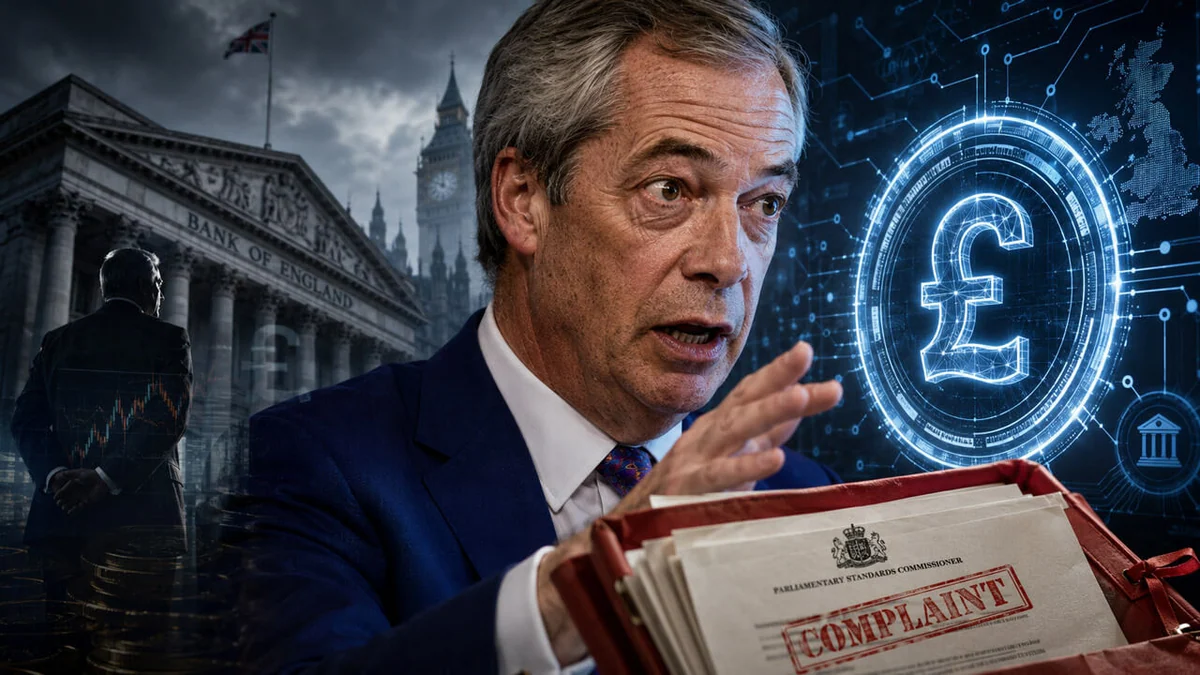
The fight over the UK’s digital pound has become a battle over crypto’s political influence
A request for the UK standards watchdog to examine Nigel Farage's reported interactions with the Bank of England has turned the UK's digital-pound fight into an access fight: who gets to shape public payment...
Bitcoin 1 Minute
An important story is making waves across the blockchain ecosystem. A request for the UK standards watchdog to examine Nigel Farage's reported interactions with the Bank of England has turned the UK's digital-pound fight into an access fight: who gets to shape public payment infrastructure while donations from a major crypto-linked backer face fresh scrutiny. A July 2 Guardian report said Labour MP Phil Brickell asked the Parliamentary Commissioner for Standards to investigate Farage's reported interactions with the Bank. The request followed the Guardian's earlier reporting that Farage told a crypto event he had challenged Bank of England Governor Andrew Bailey over the central bank's digital-pound work.
No finding of wrongdoing has been published yet. The commissioner's current investigations page describes inquiries as currently in the fact-finding stage before any decision is made. It currently lists Farage under a Rule 5 failure-to-register inquiry opened on May 13, 2026, while the July 2 request remains a complaint rather than a published lobbying-rule case.
Market Dynamics
The complaint pulls three live policy fronts into one public flashpoint: the Bank's digital-pound design work, stablecoin regulation, and the rules governing crypto-linked political finance. Related Reading UK moves to curb crypto-linked political donations after Tether billionaire bankrolls Reform The new rules could cut off a funding route that turned offshore crypto wealth into UK political power. May 3, 2026 Andjela Radmilac Why the complaint changes the digital-pound debate The digital pound is still only a potential future form of public money.
The Bank of England says no decision has been made on whether to introduce it, and that any launch would leave cash in place and would involve central-bank money rather than a cryptocurrency. Its October 2025 update says the Bank and HM Treasury are continuing a design phase through 2026, with a blueprint and evidence-based assessment due before any decision on further development. If ministers and the Bank later chose to build one, Parliament would still need to pass primary legislation.
That makes the current period unusually important. The UK's digital-pound project remains a live design process in which the Bank is collecting evidence, testing technology, running the Digital Pound Lab, and engaging with industry, academia, civil society, and other stakeholders. The complaint lands directly inside that consultation window.
Market Impact
According to earlier reporting, Farage and Reform MP Richard Tice met Bailey in September 2025, and Farage later described challenging the Bank's digital-pound work at a crypto event. The Bank was reported as saying that the meeting was part of its engagement with political representatives and that it acknowledged Farage's different view. That response has wider implications, but routine engagement can still become politically charged when the person raising the issue leads a party that has received large donations from a backer with crypto interests and when the policy at issue could affect the balance between private stablecoins and public digital money.
Earlier public arguments often centered on surveillance, privacy, cash, and whether a central bank digital currency would give the state too much reach into personal payments. Those questions remain. The access question now sits beside them: who gets privileged input while the design is still being shaped?
The Bank's own digital-pound update frames the issue as a broader “multi-money” system in which households and businesses may use cash, commercial bank deposits, stablecoins, tokenized assets, and potentially a digital pound at equal value. The Farage complaint shifts the focus from the digital pound itself to who gets a voice, even as the UK is still deciding what public money should look like in a digital economy. A digital pound would be public money issued by the central bank.
Crypto markets are watching this development closely as investors weigh its potential impact on prices.