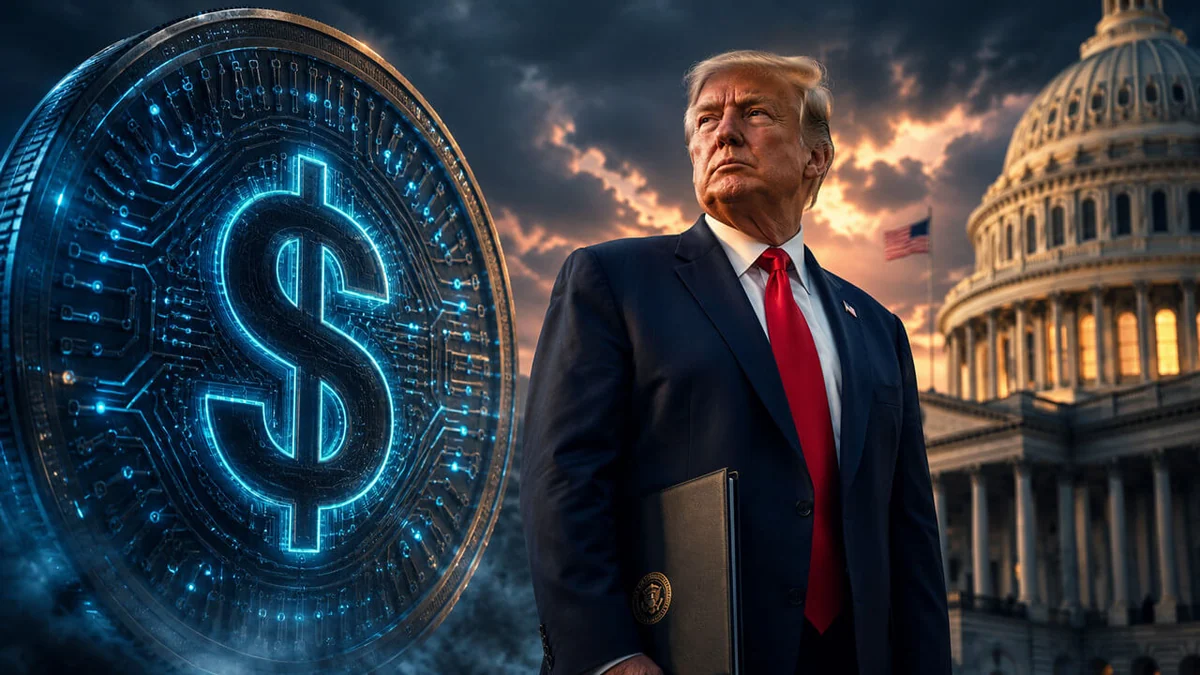
Why anti-CBDC Trump refuses to sign bill banning a digital dollar through 2030
President Donald Trump has spent his second term trying to close the door on a U.S. central bank digital currency. On Wednesday, he canceled a planned signing ceremony for a housing bill that would put a temporary ban...
Bitcoin 1 Minute
An important story is making waves across the blockchain ecosystem. President Donald Trump has spent his second term trying to close the door on a U. central bank digital currency. On Wednesday, he canceled a planned signing ceremony for a housing bill that would put a temporary ban on a Fed-issued digital dollar into federal law.
The decision placed Trump in the unusual position of blocking, at least temporarily, a measure that would codify his own opposition to a digital dollar. The president has repeatedly described a Federal Reserve-issued central bank digital currency, or CBDC, as a threat to financial privacy and prohibited federal agencies last year from taking steps to establish, issue, or promote one. Trump’s move did not signal a change in that position.
Market Dynamics
Instead, he turned the 21st Century ROAD to Housing Act and its CBDC provision into leverage, saying he would withhold his signature until Congress passes the SAVE America Act, an elections bill requiring voter identification and documentary proof of citizenship. He wrote on Truth Social: Today’s Housing News Conference and Signing is hereby canceled until such time as we pass the desperately needed SAVE AMERICA ACT, which I consider to be a National Emergency. Donald Trump President (47th) United States of America Share on View Profile The cancellation came hours before Trump was expected to appear at the US Capitol for a signing ceremony.
It surprised lawmakers after the housing measure cleared the Senate 85-5 on Monday and the House 358-32 on Tuesday. Those margins exceeded the two-thirds threshold needed to override a presidential veto, although it is unclear whether Republicans would maintain that level of support if forced to vote against Trump. Trump delays a statutory CBDC Ban The ROAD to Housing Act is primarily intended to increase the supply of homes, reduce regulatory barriers to construction, and expand access to housing finance.
Its final section also includes an unrelated restriction on the Federal Reserve’s ability to issue a digital dollar. The provision would prevent the Fed from issuing or creating a CBDC, directly or through a financial intermediary, until Dec. It also states that the central bank cannot issue a substantially similar digital asset without authorization from Congress.
Market Impact
A CBDC would be a digital liability of the Federal Reserve made available to the public. It would differ from privately issued stablecoins such as Tether’s USDT or Circle’s USDC, which are issued by companies and generally backed by cash, Treasury securities, and other reserve assets. The prohibition is written around central bank-issued money and would not ban private stablecoins or other open, permissionless dollar-denominated digital assets that preserve protections similar to those associated with physical currency.
The Federal Reserve has not decided to create a CBDC. It has said it would proceed only with authorization from Congress and the executive branch. Still, the possibility has drawn sustained opposition from Republican lawmakers and digital asset groups that argue a government-issued currency could provide authorities with greater visibility into private transactions.
Trump acted on those concerns shortly after returning to office. His January 2025 executive order barred federal agencies from taking action to establish, issue, or promote a CBDC and instructed them to end initiatives related to creating one. The order did not ban every form of technical or academic research involving digital currencies.
Crypto markets are watching this development closely as investors weigh its potential impact on prices.