Anguished families left to identify Venezuela quake victims at makeshift morgue
Anguished families left to identify Venezuela quake victims at makeshift morgueImage source, via Getty ImagesImage caption, Families face long waits at a port facility transformed into a morgue in La GuairaByNorberto...
July 31 — İsrail x Hizbullah ile kalıcı barış anlaşması...?
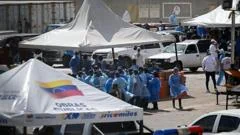
Here is the latest breaking news from around the world: Anguished families left to identify Venezuela quake victims at makeshift morgueImage source, via Getty ImagesImage caption, Families face long waits at a port facility transformed into a morgue in La GuairaByNorberto ParedesBBC News Mundo, Reporting fromLa Guaira, VenezuelaPublished14 minutes agoWarning: This story contains distressing detailsAt a port storage facility transformed into a makeshift morgue in La Guaira, the same scene repeats itself again and again. Families - many of whom have already spent days searching hospitals, shelters and rubble - wait hours to try and confirm the deaths of their loved ones. As the death toll of Venezuela's twin earthquakes surpasses 2,600, officials face the challenge of not only recovering victims, but identifying them.
The scale of the disaster has overwhelmed local services, forcing institutions to improvise. With little infrastructure left standing nine days after the tremors, bodies have been put outside or in temporary tents. Under the blazing sun, dozens of families wait with a mixture of anguish and dread.
The Details
Image source, MundoImage caption, Families try to identify their loved ones from images cycling across two television screensRows of chairs have been placed inside and outside Los Silos, where sadness is contagious. Some stare blankly into space, others check their phones, reading the news or answering messages. Just a few metres away, armed personnel from the Bolivarian Armed Forces control access to the site.
"I'm afraid of what I'm going to see in there, but it's the only way to end this agony," a woman says before passing through the gate. She has been searching for her nephew for nearly a week. "I've looked for him everywhere: in the building, in the hospitals, I've spoken to everyone… and no one knows anything.
"Image source, MundoImage caption, Medical and forensic personnel work alongside bodies, covered with plastic bagsInside, the smell of decomposition is the first thing that greets you. Some family members cover their mouths with their hands. Most wear cloth masks, which offer little relief.
What Experts Say
Within minutes, many stop reacting. They seem to grow used to it. Nearby, hundreds of bodies lie in rows, wrapped in plastic bags and exposed to the sun.
In the sweltering heat, decomposition is rapid. The bodies are arranged according to when they were recovered. At one end of the site, a tent offers free cremation services.
At the other, forensic specialists use dental records to help identify victims whose bodies have become difficult to recognise. Families face two options. Those who think they can identify a loved one by their clothing are taken to one area.
The story has become one of the most prominent items on the global agenda.