El Salvador’s Bitcoin reserve faces an accounting reckoning under new IMF pressure
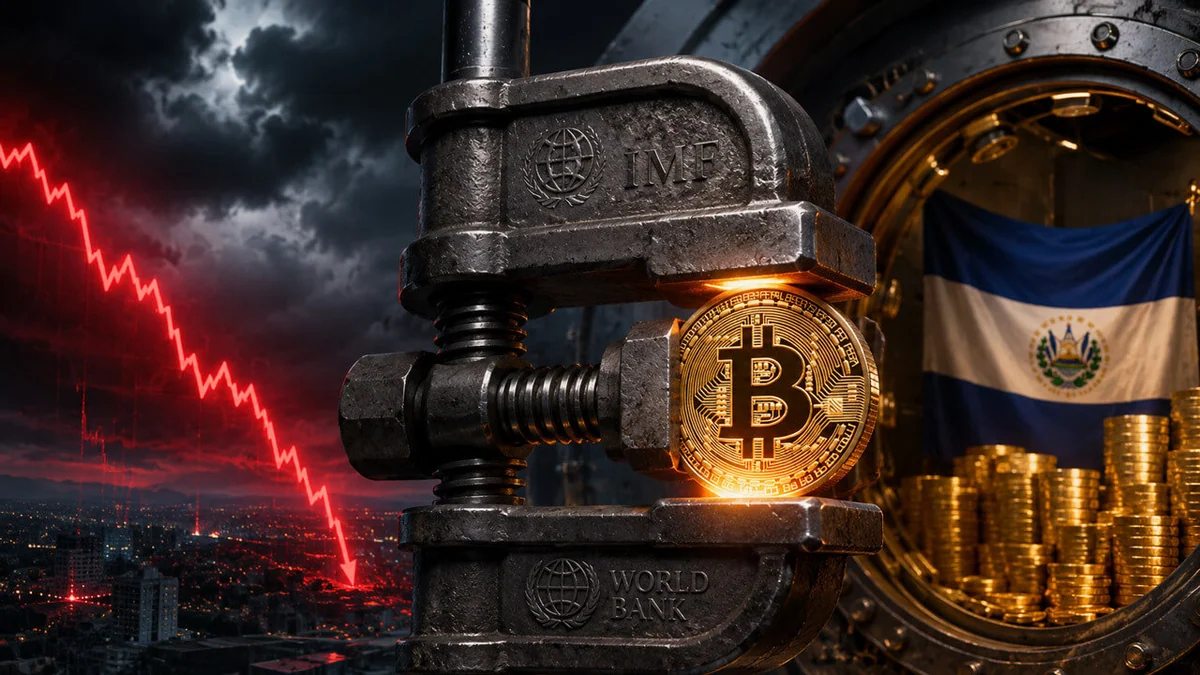
El Salvador’s Bitcoin reserve is back in the market spotlight because its public one-BTC-a-day narrative has resurfaced just as Bitcoin’s drawdown, IMF conditions, and wallet-accounting questions are pressing on the...
Bitcoin 1 Minute
An important story is making waves across the blockchain ecosystem. El Salvador’s Bitcoin reserve is back in the market spotlight because its public one-BTC-a-day narrative has resurfaced just as Bitcoin’s drawdown, IMF conditions, and wallet-accounting questions are pressing on the same policy. BitcoinTreasuries lists El Salvador’s government holdings at 7,696 BTC, worth about $460 million, as of Jun. The figure keeps the country among the largest government-linked Bitcoin holders tracked by the site and gives the renewed debate over its one-Bitcoin-a-day strategy a concrete anchor.
The market backdrop gives that debate urgency. ’s Bitcoin market page showed BTC changing hands around the $59,000 to $60,000 range, after a high-single-digit decline over seven days and an almost 19% drop over 30 days. The result is a durability test for sovereign accumulation.
Market Dynamics
A daily one-BTC allocation is too small to move the global Bitcoin market on its own, yet it can still indicate whether government dollar-cost averaging behaves differently from ETF demand or corporate treasury demand when the same asset is falling. Why a small reserve carries large policy weight Measured against Bitcoin’s roughly $1. 2 trillion market value, El Salvador’s 7,696 BTC reserve is a limited market position.
It represents a fraction of the Bitcoin supply and is dwarfed by the holdings held by US spot Bitcoin ETFs, exchanges, and the largest corporate treasury buyers. Measured against sovereign policy, the reserve carries more weight. It is a continuing political signal, a fiscal accounting question, and a test of how far a government can carry a Bitcoin strategy after retreating from the most aggressive version of its legal-tender experiment.
That distinction separates El Salvador from better-known institutional Bitcoin flows. ETF investors can redeem shares. Corporate holders can refinance, issue equity, cut spending, or face pressure from public-market investors.
Market Impact
A government reserve sits inside a different system. It has to coexist with budget targets, external lenders, public accounting, and, in El Salvador’s case, a formal IMF program. Reserve balance BitcoinTreasuries listed El Salvador at 7,696 BTC, worth about $460.
The reserve remains visible during a drawdown and provides a current balance-sheet anchor. Daily-buying narrative A June 26 X post by Pete Rizzo resurfaced claims that El Salvador buys 1 BTC per day and had bought more than 170 BTC in 2026. The post explains why the issue returned to market discussion and should be treated as social context, with net accumulation assessed against wallet and IMF records.
IMF constraint IMF materials describe commitments around voluntary Bitcoin use, US-dollar tax payments, and no voluntary public-sector BTC accumulation. The policy tension turns the reserve into an accounting and credibility test, alongside its role as a Bitcoin conviction trade. Related Reading El Salvador buys the dip defying IMF demands: Over $100M in BTC added as price wobbles What the timing says about sovereign adoption, and whether it props up spot liquidity.
Crypto markets are watching this development closely as investors weigh its potential impact on prices.