
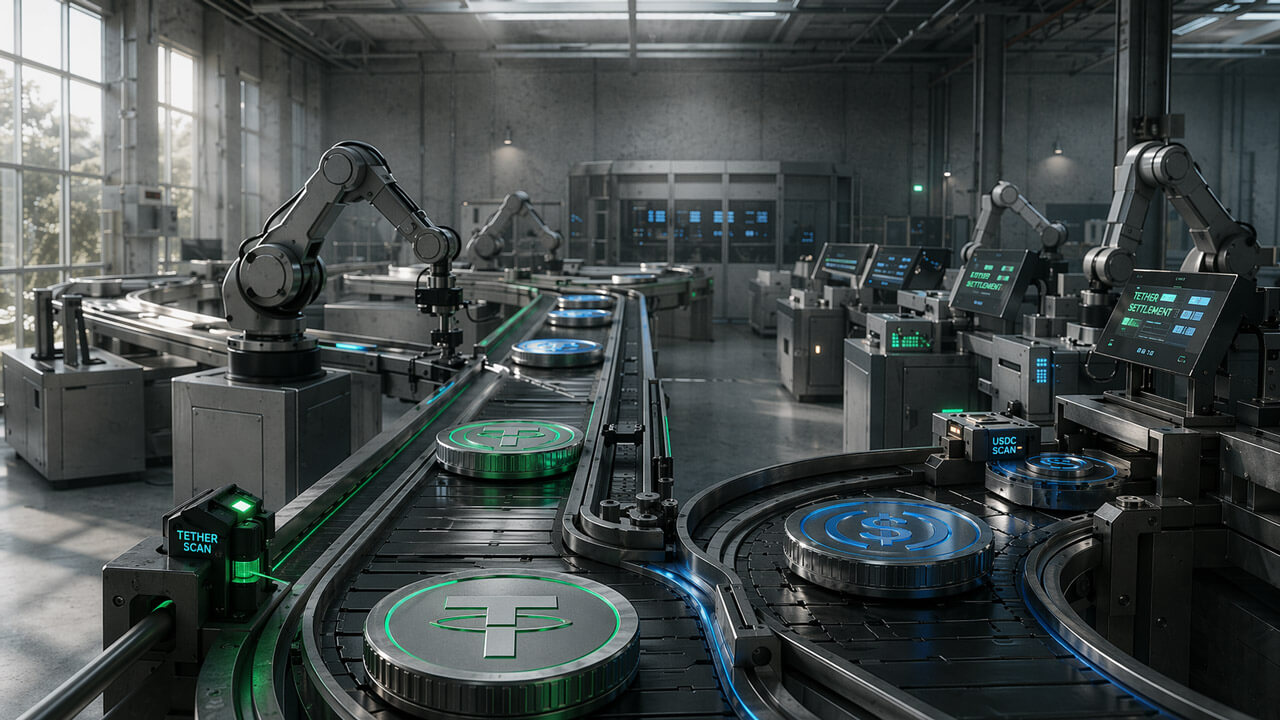
Staggering $28 trillion flows through crypto’s ‘agent economy’ – but 76% of it is just bots shuffling stablecoins
Artificial intelligence and crypto-native tools are quickly shaping a future where software agents can fund themselves, run cross-chain strategies, and move through financial markets with no one at the controls....
Bitcoin 1 Minute
Kripto piyasalarında dikkat çekici bir gelişme yaşandı. Artificial intelligence and crypto-native tools are quickly shaping a future where software agents can fund themselves, run cross-chain strategies, and move through financial markets with no one at the controls. According to a recent report by DWF Ventures, automated and agentic activity now accounts for an estimated 19% of all on-chain transactions, with 17,000 agents launched since 2025. The report added that the agent economy is already here.
For now, most of this machine-driven money movement happens through bots shuffling stablecoins across a patchwork of payment systems that still lean on centralized gateways, managed issuers, and card-linked rails. Crypto is building the interfaces for machine payments before it has built the autonomy those interfaces are supposed to enable. Why this matters Headlines about “AI agents” spending crypto suggest a new autonomous machine economy, but the underlying flow still looks like bot-driven plumbing controlled by familiar intermediaries.
Piyasa Dinamikleri
That gap determines who captures fees, how much demand actually accrues to crypto rails, and whether this trend ultimately strengthens DeFi or simply deepens the dollar system’s reach. Related Reading The crypto winners from AI are not AI coins as agents start spending autonomously The rise of AI agents is creating a simple question with huge implications for crypto: how does software pay? Mar 28, 2026 Andjela Radmilac The machine that's actually running Before treating DWF's 19% figure as a clean measure of autonomous finance, it helps to understand what it actually measures.
Stablecoin Insider's data for the first quarter of 2026 shows that bots accounted for roughly 76% of stablecoin transaction volume , while total stablecoin transaction volume reached $28 trillion, up 51% quarter over quarter. Bots and automated systems drove 76% of the $28 trillion in stablecoin transaction volume recorded in Q1 2026, per Stablecoin Insider. Retail-sized transfers fell 16% over the same period, the sharpest decline on record.
Automation, routing, and high-frequency machine activity drove that growth. Software systems moving programmatic dollars across exchanges, wallets, liquidity venues, and payment intermediaries constitute the machine economy's currently visible form. Stablecoins are a natural fit here.
Piyasalara Etkisi
They don’t swing in price, they settle on programmable rails, and they use the same units of account that most software already understands. For any automated system that needs to move money without worrying about currency risk, stablecoins just make sense. DefiLlama currently estimates the stablecoin market at approximately $320 billion, with Ethereum holding about 52% of supply, Tron carrying $86.
7 billion, overwhelmingly in USDT , Solana at $15. 7 billion , led by USDC , and Base at $4. 9 billion, also heavily in USDC.
The blockchains leading the way in machine-driven stablecoin flows are the ones already built for moving dollar tokens at scale. In many ways, stablecoins are turning into the first money rails used just as much by software as by people. Hybrid by design Payment standards for machine commerce are starting to take shape.
Kripto piyasaları, bu gelişmenin ardından yakından takip ediliyor. Yatırımcılar, söz konusu haberin fiyatlar üzerindeki olası etkilerini değerlendiriyor.