
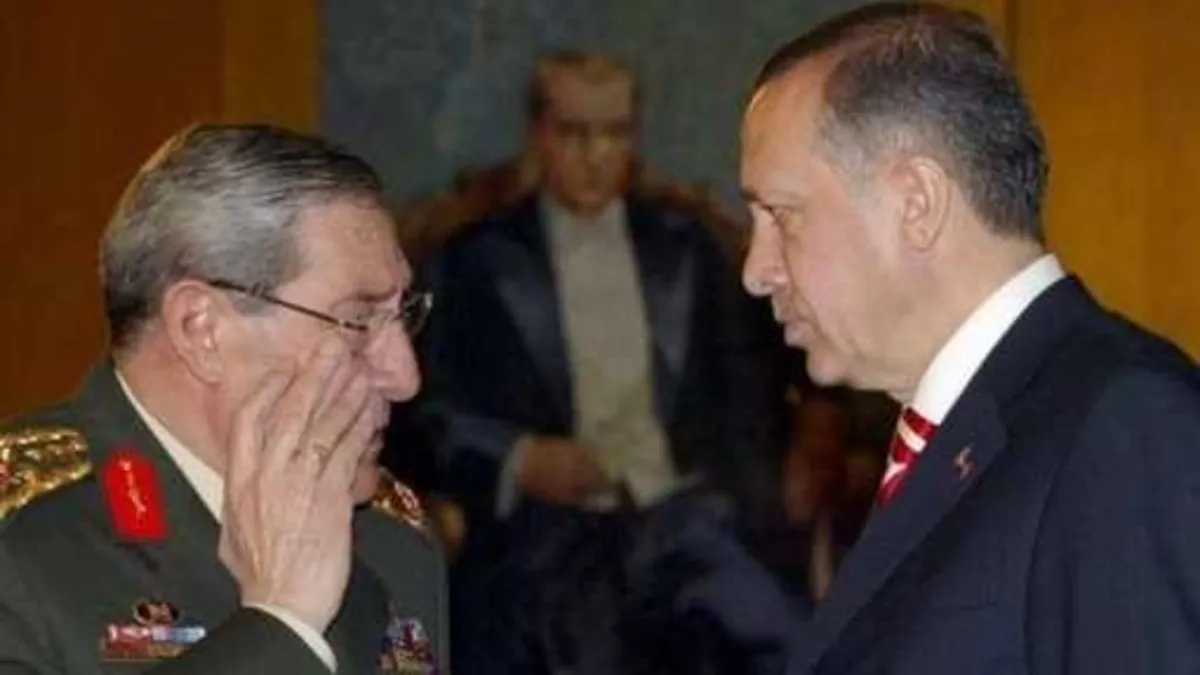
A dark stain on the history of Turkish democracy
News Lifestyle Economy Sports Authors Roza HOME PAGE ZİRAAT TURKEY CUP ECONOMY NEWS LIFESTYLE SPORTS AGRICULTURE CIVIL SERVANTS AUTHORS VIDEOS GALLERY GOOD MORNING FINANCE ROZA OTHER CATEGORIES Education Culture Arts Media Tourism Automotive...
No Meeting by June 30 — Where will Trump and Putin meet after that?
A development of great interest to the global public has come to the fore. Agenda Life Economy Sports Writers Roza HOME PAGE AGRICULTURE TURKISH CUP ECONOMY AGENDA LIFE SPORTS AGRICULTURE CIVIL SERVANTS WRITERS VIDEOS GALLERY GOOD MORNING FINANCE ROZA OTHER CATEGORIES Education Culture Art Media Tourism Automobiles SUPPLEMENTS Saturday Sunday TODAY’S E-NEWSPAPER News Current Affairs News A dark stain on Turkish democratic history A dark stain on Turkish democratic history The “April 27 e-Memorandum” process became a dark stain on Turkish democratic history and one of the major turning points in political life. However, it was swept aside by the firm stance of Erdoğan and the AK Party government April 2026 ANKARA It has been 19 years since the process known as the “April 27 e-Memorandum” in Turkish democratic history. The crisis that occurred prior to the 2007 presidential election became one of the major turning points in political life.
While the AK Party’s nomination of Abdullah Gül drew criticism from certain circles, statements by then-Chief of General Staff Yaşar Büyükanıt and the “Republic rallies” further fueled the debate. E-MUHTIRA: The "367 condition" thesis raised during the election process made it difficult to elect a president in Parliament. In the first round of voting held on April 27, Gül received 357 votes, while the CHP challenged the result in the Constitutional Court.
Details of the Developments
A statement published on the General Staff’s website that same night—known as the “e-muhtıra”—led to tension between the government and the military. The government issued a statement the following day opposing this stance. AK PARTY WON A SOLE MAJORITY: When the Constitutional Court annulled the first-round vote on May 1, a decision was made to hold early elections.
In the election held on July 22, 2007, the AK Party won 46.6% of the vote and returned to single-party rule. Subsequent constitutional amendments paved the way for the direct election of the president by the people. THE 367 CRISIS WAS OVERCOME WITH MHP SUPPORT: During the renewed parliamentary election process, the 367 crisis was resolved with the MHP’s participation in the sessions, and Abdullah Gül was elected as Turkey’s 11th
President of Turkey on August 28, 2007. The controversial statement was removed from the General Staff’s website in 2011. POLITICS STOOD FIRM AGAINST GUARDIANSHIP: The AK Party government gave a clear response to the April 27 e-memorandum—a dark stain on Turkish democratic history—and this undemocratic intervention.
In a statement on April 28, 2007, the Government Spokesperson of the time defied the centers of tutelage, declaring, “It is absolutely unacceptable in a democratic state governed by the rule of law for the General Staff, an institution subordinate to the Prime Minister, to use language against the government.” Politics’ firm stance once again demonstrated Turkey’s democratic maturity.
The development sparked widespread reaction in the international community. Diplomatic circles are closely monitoring the situation.